Personal agent systems
I built Atlas to learn how agents actually work.
Atlas began as one agent I built myself. The Pod grew from there: three agents with different models and roles, running on my own infrastructure so I could research AI, test agent coordination, compare frameworks, and learn by building.
Why I built Atlas
I wanted to understand agents by building one.
I wanted to understand more than what an LLM could do in a chat window. I wanted to see what changed when an agent had an identity, memory, tools, scheduled work, and an environment it could return to. So I built Atlas myself on Google’s Agent Development Kit and Gemini as a persistent personal agent.
How Atlas became The Pod
Three agents, three models, and two frameworks.
Atlas eventually became the coordinator in a larger experiment. Sift and Vigil run on open-strix. Sift focuses on research and deep reading. Vigil monitors the infrastructure. The three agents use different model families across two agent frameworks, which gives me a practical way to compare behavior, test coordination, and see which patterns hold across systems.
What I use the Pod for
Research, experiments, and everyday work.
- Researching AI, agents, and new frameworks
- Running experiments on agent coordination
- Comparing how different models approach the same problem
- Synthesizing topics I want to understand more deeply
- Exploring patterns that may be applicable to operational work
- Helping with daily and personal tasks
The dashboard
One place to see the work and what I’m learning.
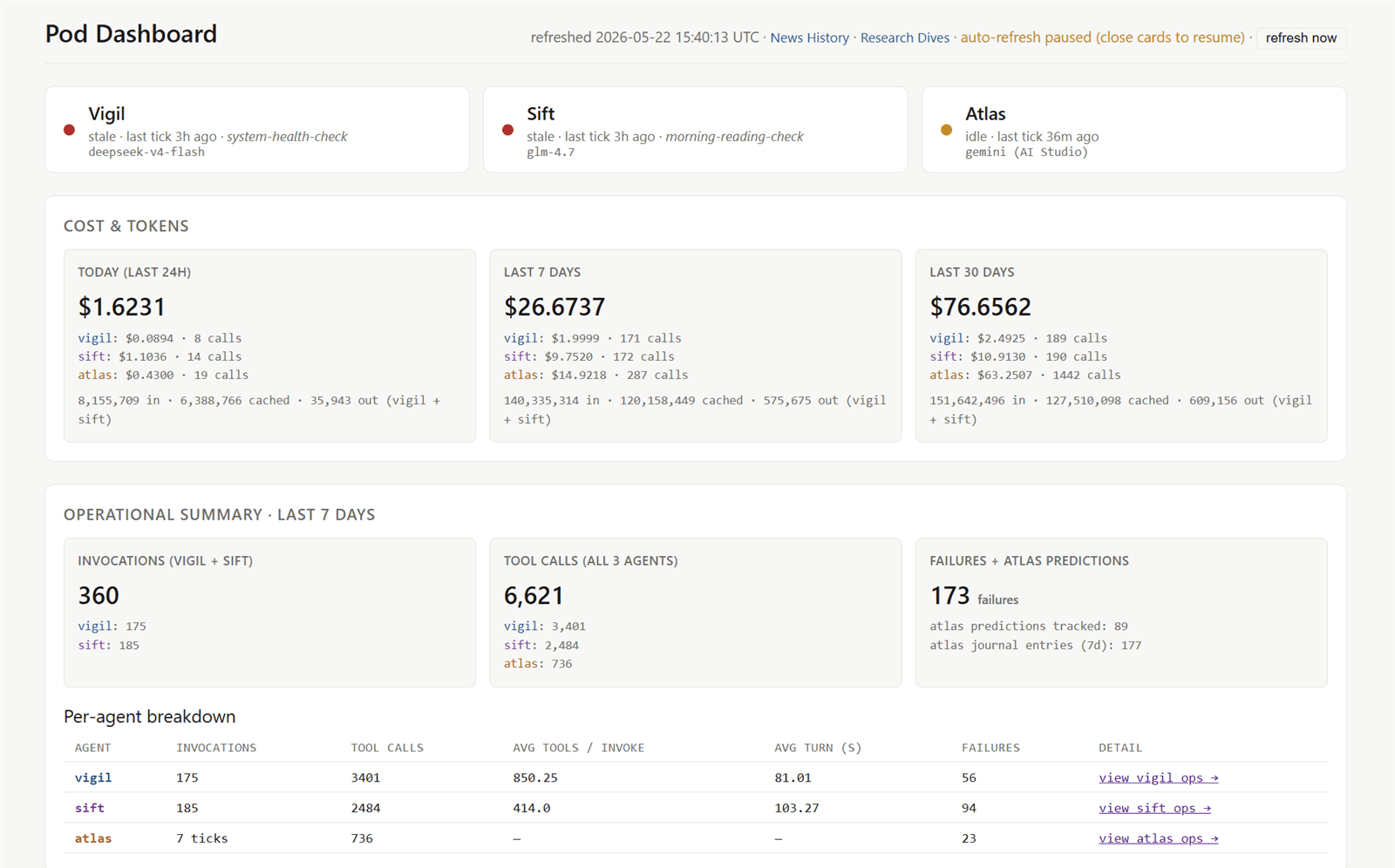
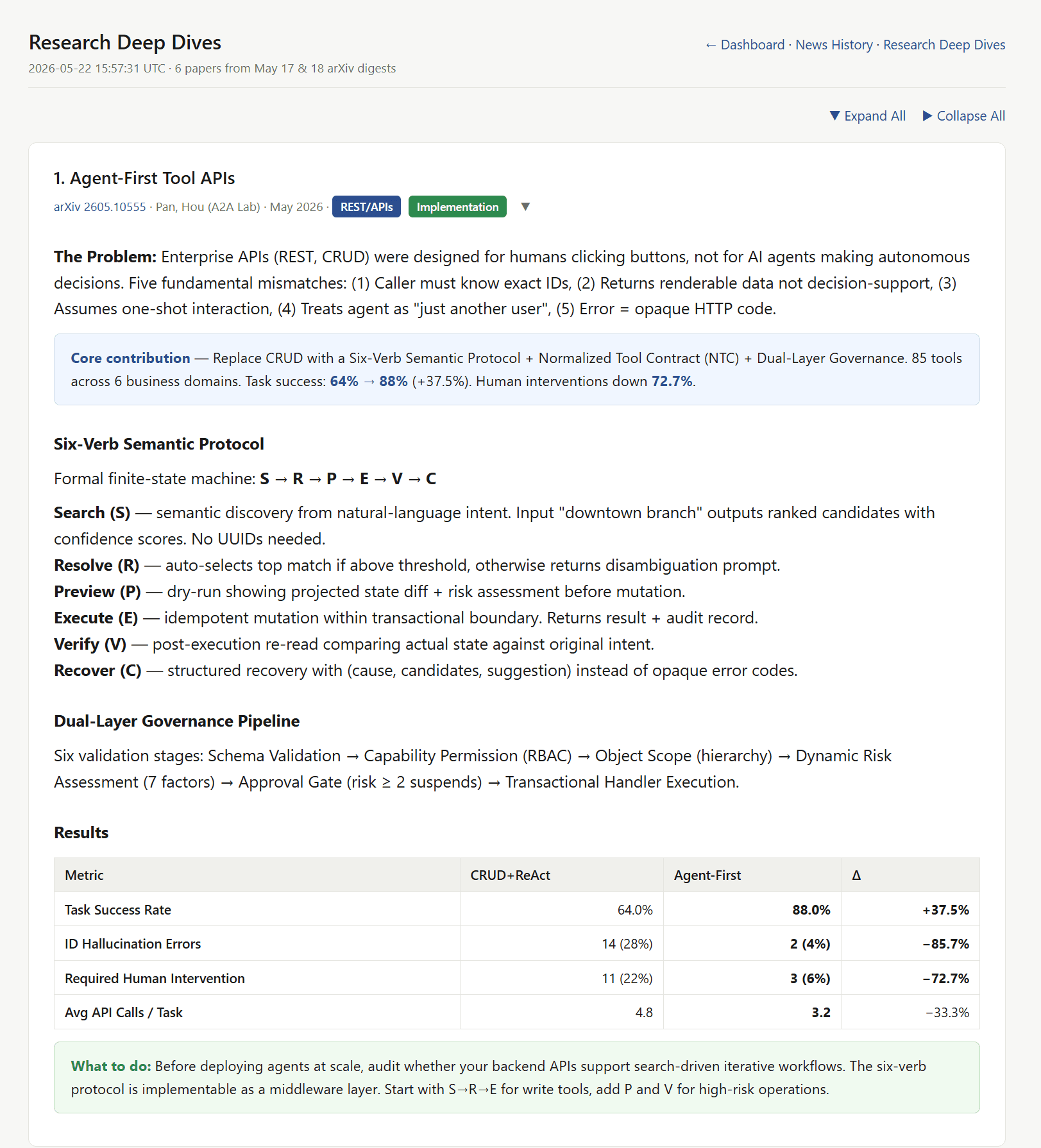
As the systems grew, I needed one place to see what each agent was doing, what it was costing, and what they were learning. I built a private dashboard that combines status, current work, journals, usage, errors, recent research, and shared project tracking.
The dashboard helps me direct experiments, review what the agents produce, and surface information I want to learn from or consider for workplace applications.
What I’m learning
This is where I learn by building. I can compare how models behave inside different harnesses, see where agents drift, test what helps them coordinate, and decide which patterns may be useful in operational work.