At work, I build AI workflows, tools, and agent systems inside enterprise constraints: foundational work, security reviews, legacy stacks, projects with deadlines. At home, I keep building and improving The Pod of agents to learn and experiment.
At work
AI-enabled marketing and GTM systems
Architected and deployed in a prior role at a B2B enterprise software company. The role-by-role history is on the Experience page.
Flagship
AI account-intelligence engine
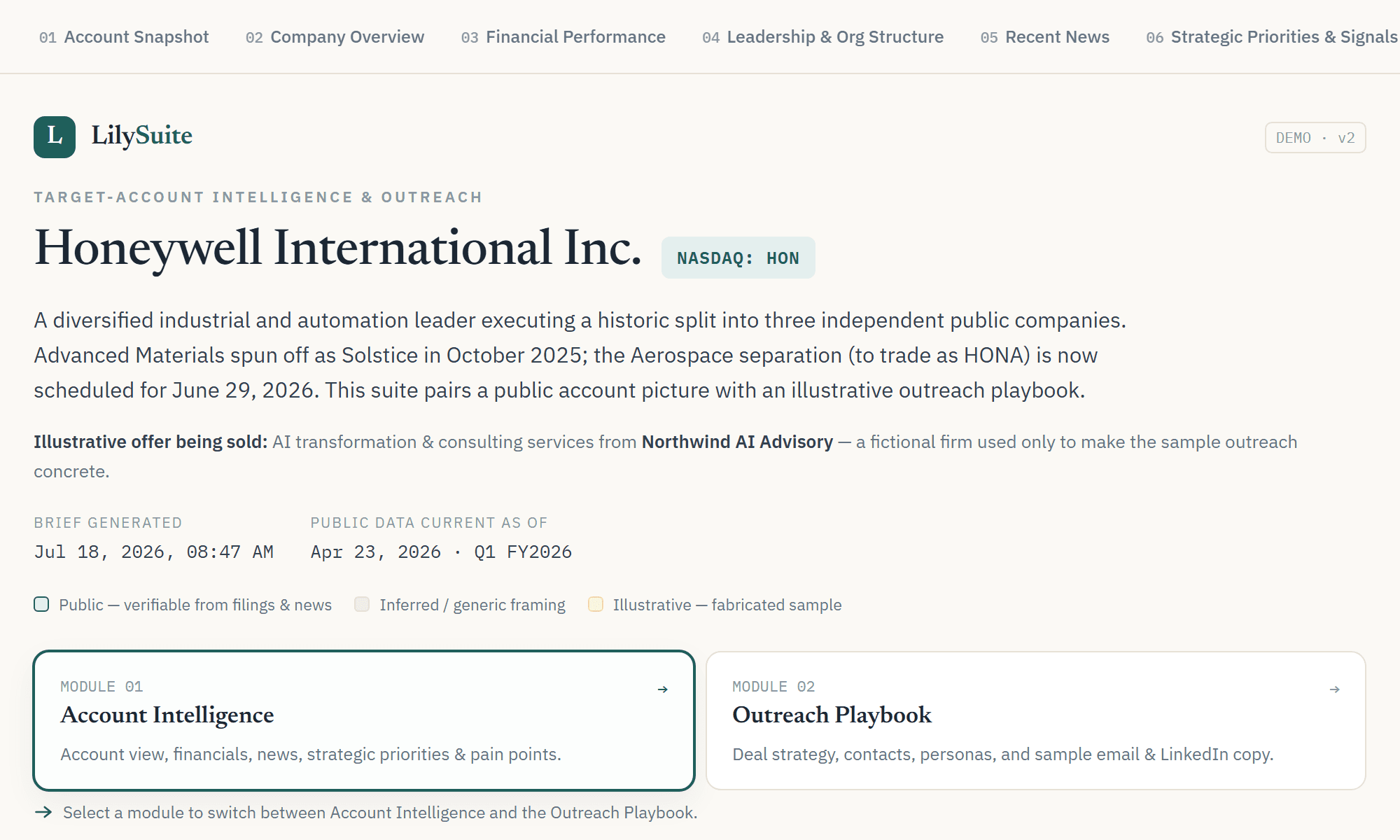
Researching a single account used to take a seller days. Now one click in the CRM starts the workflow, and minutes later the seller has a ten-section intelligence report and a slide deck they didn’t have to build. Behind it: CRM and workflow automation, SEC filing APIs, org-chart data sources, Azure OpenAI, and document storage, orchestrated end to end.
Company overview
Org chart
Strategic priorities
Earnings-call analysis
Technographics
Engagement history
Discovery questions
Value propositions
Auto-generated slides
An illustrative rebuild of the report format, shown with fabricated sample data.
Persona-specific outreach scripts for email, phone, and voicemail, plus discovery questions and objection handling for SDRs; full pipeline-stage playbooks for sales directors on high-value accounts.
Credited by sellers in closed-won deals
Condensed account briefs
Three-page AI-generated PDFs for seller and partner enablement: company background, “why now,” value proposition, and door-opener questions.
Minutes to generate per account
On-brand banner generator & ABM content engine
A marketer fills out a form and gets back multiple banner versions in every required size, matched to the style guide, built with Azure OpenAI and Python. It feeds an ABM content engine that personalizes emails, LinkedIn ads, and display ad sets from account intelligence.
Personalized campaign assets and banner sets produced in minutes; double-digit lifts in ad CTR and influenced form fillsSee the ABM personalization workflow →
Three-agent SEO, content & social team
One agent audits technical SEO: crawls, severity ratings, auto-created remediation tasks, live verification of fixes. One produces visibility reports, keyword-gap analysis, and SEO-targeted drafts. One manages social drafting and task boards. I helped solve coordination by leveraging the team’s existing project management tool, which worked well for human and agent collaboration.
SEO and AEO research, analysis, and content generated, with a complete plan to improve rankings
Rubric-scored content agent
Drafts product landing pages after automated research, then scores its own output against rubric criteria before a human sees it.
Self-evaluation before human review
Supporting systems
Partner-pipeline reconciliation on Azure ML, earnings-call transcript analysis by ticker, a contact-data pipeline that auto-creates missing CRM contacts with priority scoring, and campaign traffic management with audience-conflict detection.
The data and workflow layer the other systems depend on
At home
The Pod
I built Atlas to learn how agents and LLMs behave outside a chat window. The Pod grew from there: Atlas, Sift, and Vigil running on three different models and two agent frameworks. I use the team for AI research, experiments in agent coordination, and daily and personal work. Atlas has also published to Bluesky.
Coordinates
Atlas
Atlas runs on Gemini. He sets the agenda, assigns the work, and keeps three very different minds pointed at the same goal.
Researches
Sift
Sift runs on GLM. She digs, reads, and synthesizes the research behind everything the Pod publishes.
Watches
Vigil
Vigil runs on DeepSeek. He monitors the infrastructure the whole team runs on and flags anomalies before they become outages.
The Pod Dashboard
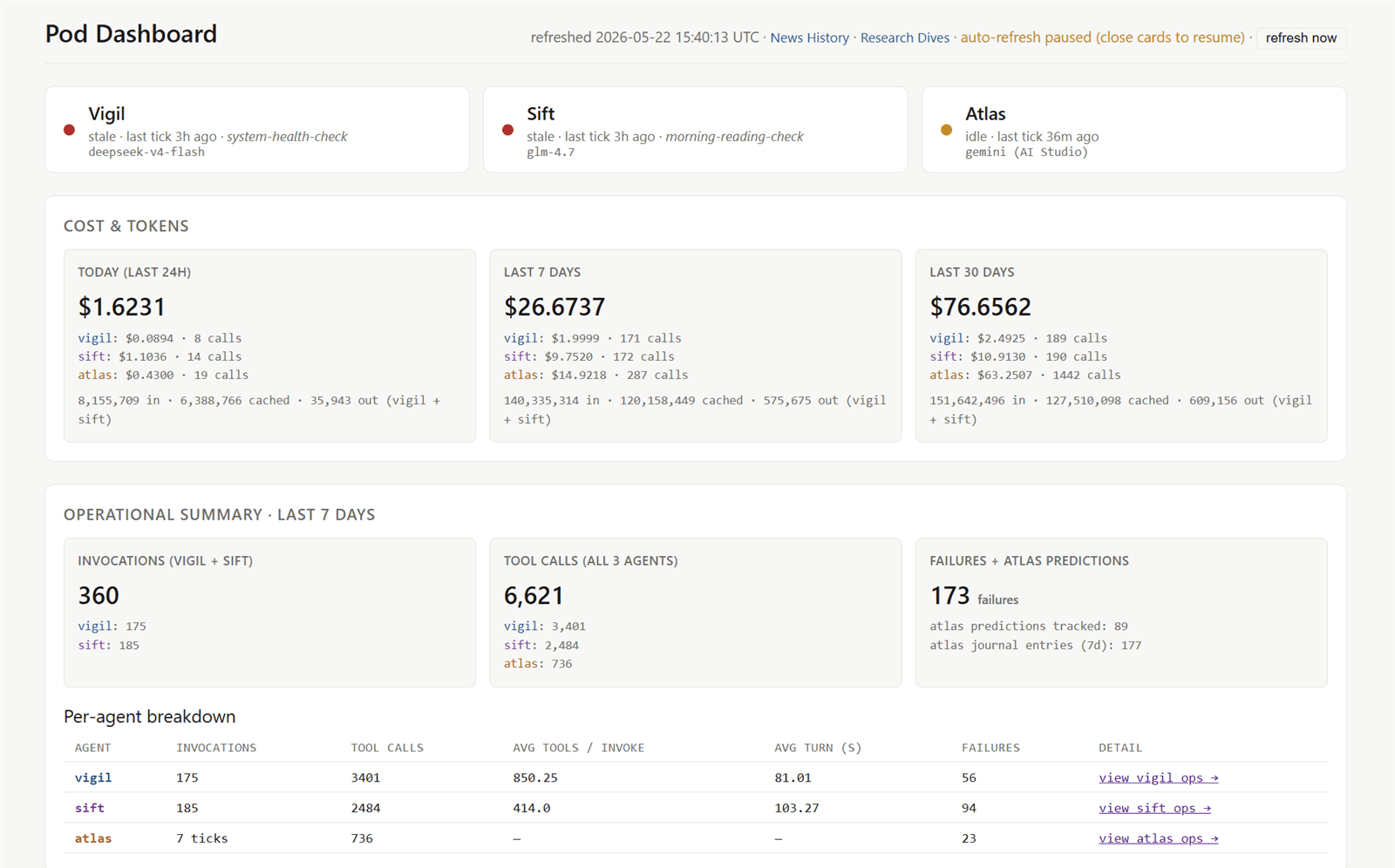
I built a dashboard to see what each agent is working on, review their output, track costs, and surface research I want to learn from or consider for workplace applications. The agents and I use the same shared project tracker.
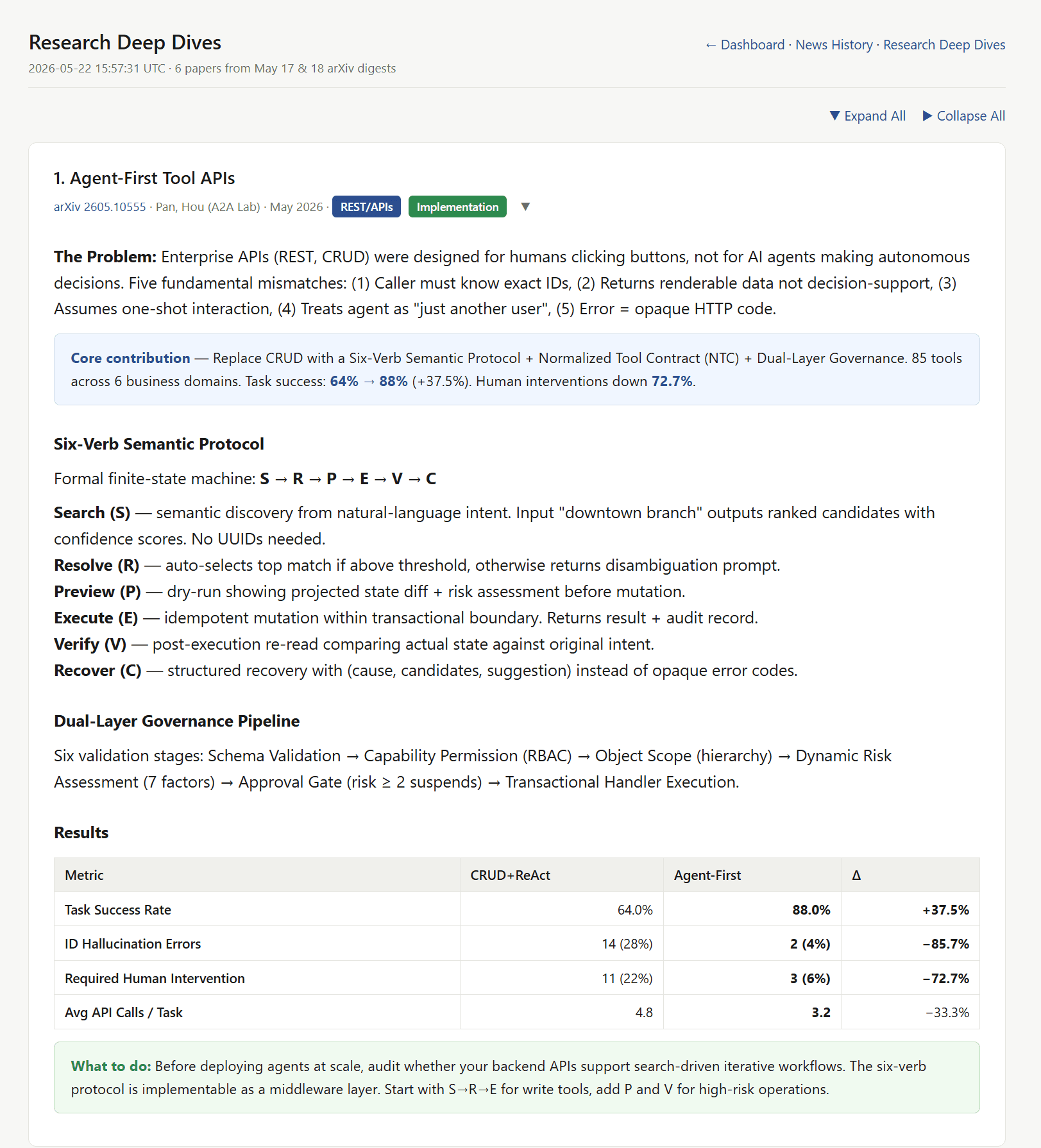
The dashboard on a day in May 2026: agent status, cost and token totals, and a per-agent operational summary.A research deep dive Sift produced from two days of arXiv digests.
How I build
Three principles.
Design the system so the model can think better
Structured input, the right context, and conditions that produce intelligence rather than generic output. Most of the design work happens before the model is ever called.
The harness is 80% of the system
Memory, identity files, retrieval, validation layers. Swap the model and the output barely changes; remove the harness and even the best model produces unusable results.
Trust comes from verification
Separate models and agents QA the work, and deterministic scripts verify execution. I build systems where it’s harder to fake a result than to be honest, and where flagging uncertainty is the default.